

About 6 out of 10 children develop secure attachments to their parents , and good parenting skills are fundamentally about fostering these connections. When we think about raising our children, many of us question whether traditional discipline methods actually work. After all, the goal isn’t just obedience—it’s raising emotionally healthy, confident individuals.

Gentle parenting offers comprehensive parenting guidance that encourages partnership between us and our children, focusing on internal willingness rather than external pressure . This parenting guide emphasizes three core values: empathy, understanding, and respect . In fact, when parents prioritize these values, children are more likely to feel safe, loved, and valued . Furthermore, these good parenting tips help children develop independence while maintaining a deep connection with us .
Throughout this article, we’ll explore what gentle parenting truly means and share tips for good parenting that actually work. We’ll address common misconceptions and provide practical parenting tips for infants through older children. Most importantly, we’ll examine 5 parenting skills that support gentle discipline without sacrificing effectiveness. Whether you’re new to this approach or looking to refine your techniques, this guide will help you navigate the rewarding path of gentle discipline.
“Gentle parenting is not passive parenting. There is nothing passive about being conscious, responsive, understanding, patient, respectful, and present.” — Kristy Lee, Parenting educator and gentle pare
The heart of gentle parenting lies in its core values. First, empathy means acknowledging children’s feelings without dismissal, helping them feel understood and supported. This validation builds secure attachment bonds and emotional intelligence. Second, respect creates a mutual relationship where children are treated as individuals with dignity. Parents who demonstrate respect through attentive listening and thoughtful responses teach children to interact respectfully with others. Third, understanding involves recognizing age-appropriate developmental expectations instead of demanding behaviors beyond a child’s capabilities. This knowledge prevents unrealistic expectations that can damage a child’s confidence.
How it differs from traditional discipline
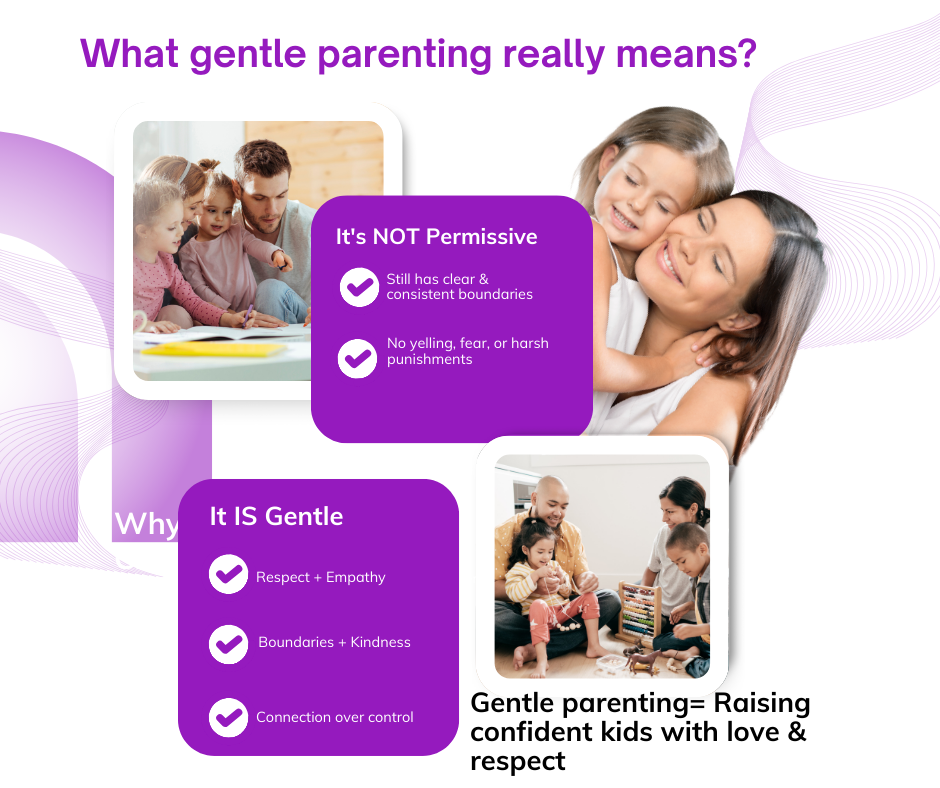
Traditional discipline typically focuses on consequences to stop unwanted behavior through time-outs, grounding, or removing privileges. Conversely, gentle parenting emphasizes understanding the underlying causes of behavior before responding. Instead of simply saying “No!” when a child misbehaves, gentle parents explain why certain behaviors are unsafe or unhelpful. This approach transforms discipline into a teaching opportunity rather than a power struggle. Furthermore, gentle discipline prioritizes connection over control, guiding children through challenges instead of punishing them.
Why it’s not permissive parenting
Despite misconceptions, gentle parenting is firmly categorized as authoritative parenting, not permissive. The key distinction lies in boundaries—gentle parents set clear, consistent limits while delivering them with kindness and explanation. Unlike permissive parenting, which often avoids conflict and lacks structure, gentle parenting maintains necessary boundaries that create security for children. Consider a homework scenario: permissive parents might let children decide when or if to complete assignments, whereas gentle parents would firmly state, “Homework needs to be done by 8:30, and I’m here if you need help”. This approach balances empathy with structure, fostering both emotional intelligence and responsibility.
Through these good parenting skills, gentle parenting provides effective guidance without resorting to fear-based tactics or inconsistent boundaries.
5 Parenting Skills That Support Gentle Discipline
1. Active listening and emotional validation
When our children feel heard, they’re more likely to cooperate. , making eye contact, and genuinely trying to understand our child’s perspective Active listening means giving our full attention. Through validation, we acknowledge their feelings without judgment, which helps reduce the intensity of big emotions.
2. Setting clear but kind boundaries
The key is setting limits mindfully and keeping them to a realistic minimum. When enforcing boundaries, stay calm, consistent, and connected. Instead of saying “Don’t touch that!”, clearly communicate consequences in advance so children understand expectations.
3. Modeling respectful behavior
Children learn primarily through observation. By demonstrating politeness, patience, and respectful communication, we teach our children how to interact with others. Simple acts like apologizing when we’re wrong show children it’s okay to make mistakes.
4. Using natural consequences
Natural consequences occur without parental interference, teaching children cause and effect. For instance, if a child doesn’t wear a jacket, they’ll feel cold. These experiences help children develop responsibility and independence. The key principle is ensuring consequences are related to the action and proportional to the behavior
5. Practicing patience and self-regulation
Patience stands out as perhaps the most vital parenting skill. By managing our emotions during challenging moments, we create emotional stability that helps children feel safe. Taking a breath before responding to challenging behavior allows us to model self-reflection and awareness. Although it’s sometimes difficult, staying calm during tantrums helps children learn to handle their own emotions. Remember that these skills take practice—we won’t always get it right, yet each attempt strengthens our parenting guidance.
Common Misconceptions About Gentle Parenting
It spoils children or makes them entitled
Critics—especially from older generations—often see it as overly lenient or unrealistic. However, research shows the parenting style is authoritarian, not gentle parenting most responsible for raising anti-social individuals. The truth? You cannot spoil a child with love. Gentle parenting includes clear, consistent limits while providing children choices within boundaries.
It only works for certain types of kids
Many believe gentle parenting only works for naturally compliant children. Yet research indicates this approach is effective even for strong-willed children. By connecting with their emotions and offering choices, I can help my strong-willed child learn to manage powerful feelings in healthier ways.
How to Apply Gentle Discipline in Daily Life
- Handling tantrums with calm and connection
- Encouraging cooperation without threats
- Using routines to reduce power struggles
- Turning mistakes into learning moments
Conclusion
Gentle parenting combines firm boundaries with empathy and respect, creating secure environments where children thrive emotionally while learning appropriate behaviors through connection rather than fear-based control.
- Gentle parenting isn’t permissive – it maintains clear, consistent boundaries while delivering them with kindness and explanation, balancing empathy with necessary structure.
- Master five core skills: active listening and validation, setting kind but clear boundaries, modeling respectful behavior, using natural consequences, and practicing patience.
- Handle tantrums through connection – stay calm, validate feelings, and remember children are having a hard time, not giving you one.
- Focus on teaching, not punishing – turn mistakes into learning opportunities by asking reflective questions and helping children understand consequences naturally.
- Cooperation increases with connection – children respond better when they feel heard and involved in solutions rather than threatened or controlled.
This evidence-based approach builds emotional intelligence and secure attachments, proving that you can raise well-behaved children without sacrificing the parent-child relationship. Remember, gentle parenting is about progress, not perfection—each interaction offers an opportunity to strengthen your bond while teaching valuable life skills.